Glass doors have become a popular feature in modern homes, offices, shopping malls, hotels, and commercial buildings. They create an open appearance, allow natural light to enter, and give interiors a clean, contemporary finish. However, choosing the right glass for a door is just as important as selecting its hardware. The glass must be strong enough for its intended use, compatible with the fittings, and suitable for the surrounding environment.
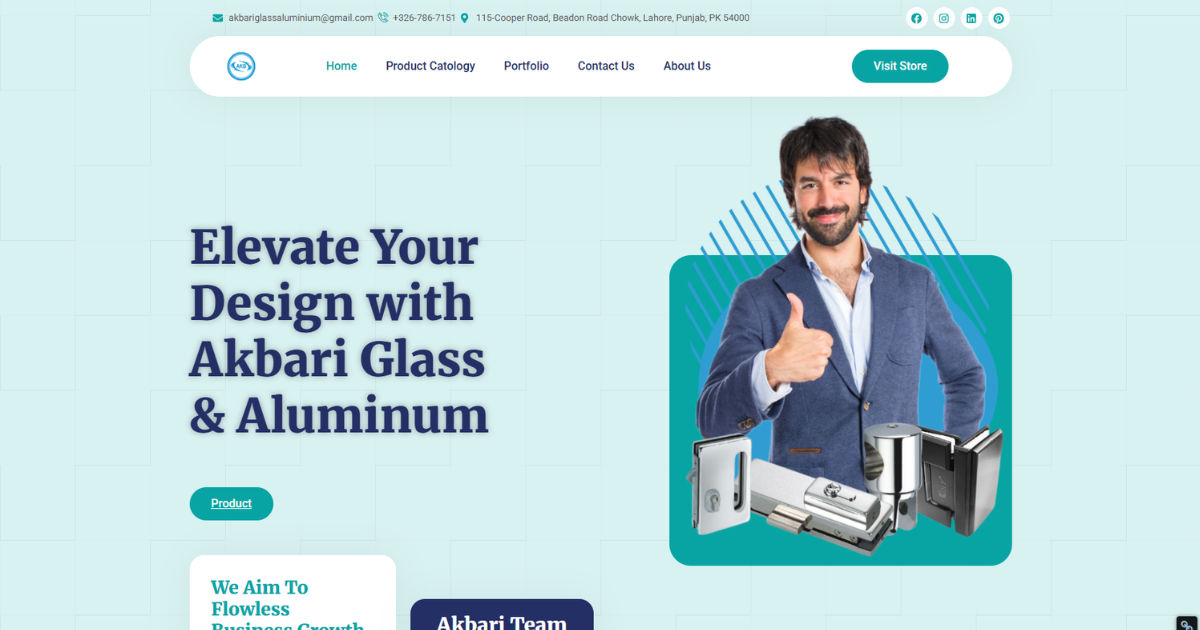
When planning a frameless glass door, many property owners and contractors consider Patch Fittings Pakistan because patch fittings provide a practical way to connect glass panels, support door movement, and create a minimal design without bulky frames. However, the performance of these fittings depends heavily on the type, thickness, quality, and dimensions of the glass used with them.
Different glass options offer different levels of strength, safety, appearance, and durability. Tempered glass, laminated glass, and laminated tempered glass are among the options that may be suitable, depending on the door's design and location. Understanding these differences helps homeowners, architects, and builders make informed decisions.
This comprehensive guide explains which glass works best with patch fittings, how to select the correct thickness, what safety features to consider, and which factors influence the overall performance of a glass door.
Patch Fittings and Their Purpose
Patch fittings are hardware components used to connect, support, and control frameless glass doors. They are commonly installed at the top, bottom, or sides of a glass panel, depending on the door system.
Unlike traditional doors with large metal or wooden frames, frameless glass doors rely on carefully designed fittings to provide support and allow movement.
These fittings may connect a glass door to a floor spring, a fixed glass panel, a wall, or another part of the door assembly. Different fittings serve different purposes, so selecting the correct type is essential.
How Patch Fittings Work
Patch fittings generally hold the glass through a clamping mechanism. Depending on the design, they may use suitable gaskets, pressure plates, and fixing components to grip the glass securely.
Some fittings are designed for the upper and lower corners of a door, while others connect fixed panels or support specific door configurations.
The glass must have the correct dimensions, thickness, and edge preparation for the chosen hardware. The cutouts and holes required for the fittings must also match the manufacturer's specifications.
Improperly positioned holes, unsuitable cutouts, or excessive clamping pressure can damage glass and compromise safety.
Why Glass Compatibility Matters
Not every type of glass works with every patch fitting. The hardware manufacturer usually specifies an approved glass thickness range, maximum panel dimensions, and weight limits.
For example, a fitting designed for 12 mm glass should not automatically be used with 8 mm glass. The difference in thickness can affect how securely the fitting grips the panel.
Likewise, a heavier glass door requires suitable hinges, patch fittings, floor springs, and supporting structures.
When researching Patch Fittings Pakistan, customers should consider the complete door system rather than purchasing the glass and hardware independently without checking compatibility.
Which Type of Glass Is Best for Patch Fittings?
The best glass depends on the door's location, dimensions, expected traffic, and safety requirements. Several types are commonly considered for frameless glass doors.
1. Tempered Glass
Tempered glass, also called toughened glass, is one of the most widely used options for frameless glass doors.
It is produced by heating glass and then cooling it rapidly under controlled conditions. This process creates a pattern of internal stresses that makes the glass stronger than ordinary annealed glass of comparable thickness.
Tempered glass is particularly suitable for doors because it offers good resistance to impact and temperature changes.
If it breaks, it typically fragments into many small pieces rather than large, sharp shards. Although this can reduce the severity of some injuries, broken tempered glass can still cause harm and should never be considered completely risk-free.
Advantages of Tempered Glass
-
Offers greater strength than ordinary annealed glass of comparable thickness.
-
Provides a clean, modern appearance for frameless doors.
-
Works with many patch-fitting systems designed for toughened glass.
-
Can withstand normal temperature variations better than ordinary glass.
-
Is available in different thicknesses and finishes.
Important Considerations
Tempered glass cannot generally be cut, drilled, or reshaped after the tempering process. Any holes, notches, and edge finishing required for patch fittings must be completed before the glass is tempered.
This makes accurate measurements essential.
For many standard frameless glass doors, 10 mm or 12 mm tempered glass may be suitable. However, the correct choice must follow the hardware specifications, structural requirements, door dimensions, and applicable safety standards.
2. Laminated Glass
Laminated glass consists of two or more glass sheets bonded together with an interlayer, commonly made from materials such as polyvinyl butyral (PVB) or other suitable glazing interlayers.
When the glass breaks, the interlayer helps hold the fragments together. This can reduce the risk of broken pieces falling away from the panel.
Laminated glass is often considered where retaining fragments is particularly important, including certain overhead, exposed, or specialized glazing applications.
Advantages of Laminated Glass
-
The interlayer helps retain broken glass fragments.
-
Can offer useful sound-reduction benefits, depending on its construction.
-
Can provide additional security when the correct glass and interlayer are selected.
-
Is available in different combinations of glass thicknesses and interlayer materials.
Is Laminated Glass Suitable for Patch Fittings?
It can be, but compatibility must be verified carefully.
Not every patch-fitting system is approved for every laminated-glass construction. The fitting must accommodate the total glass thickness and the specific design of the laminated panel.
Some systems require special hardware or installation methods. The manufacturer should confirm whether the selected fitting is suitable for the exact laminated-glass specification.
3. Laminated Tempered Glass
Laminated tempered glass combines the strength characteristics of tempered glass with an interlayer designed to help retain fragments after breakage.
It is made by bonding two or more glass sheets together, with at least the specified layers made from tempered glass when the product is described as laminated tempered glass.
This construction can be useful where both impact performance and post-breakage fragment retention are important.
Benefits of Laminated Tempered Glass
-
Combines tempered glass with a fragment-retaining interlayer.
-
Can provide a useful safety solution for selected applications.
-
May be appropriate for certain large, exposed, or higher-risk glazing installations.
-
Can support specialized architectural designs when the system is engineered correctly.
However, it is not automatically the best choice for every glass door. Its suitability depends on the application, the required safety performance, the fitting design, and the applicable standards.
It may also cost more than a basic tempered-glass panel.
4. Annealed Glass
Annealed glass is ordinary glass that has been cooled gradually during manufacturing. It is generally less resistant to impact than tempered glass of comparable thickness.
Although annealed glass has uses in some windows, cabinets, and other applications, it is usually not the preferred choice for frameless doors where human impact is foreseeable.
Before using any non-tempered glass with patch fittings, check the relevant building regulations, safety-glazing requirements, and hardware manufacturer's instructions.
For most frameless doors in busy residential or commercial settings, a suitable safety-glass system is a better starting point.
What Glass Thickness Is Suitable for Patch Fittings?
Glass thickness is one of the most important factors when planning a frameless glass door. The correct thickness depends on the fitting system, panel dimensions, door weight, frequency of use, and structural conditions.
A panel that is too thin may not be compatible with the fittings. A panel that is unnecessarily thick may increase cost and weight without providing a meaningful benefit for the specific design.
8 mm Glass
Eight-millimeter glass may be suitable for certain smaller or specially designed glass panels when the complete hardware system explicitly allows it.
However, it should not be assumed suitable for a standard frameless swing door simply because the fittings appear to fit.
The panel dimensions, intended use, and hardware rating must be checked first.
10 mm Glass
Ten-millimeter tempered glass is used in some frameless glass-door systems, particularly where the design and hardware specifications permit it.
It can provide a relatively lightweight appearance while offering the strength associated with properly manufactured tempered glass.
Its suitability depends on the door size, expected traffic, and the load capacity of the fittings.
12 mm Glass
Twelve-millimeter tempered glass is a common choice for many frameless commercial and residential swing doors.
Its greater thickness can provide a substantial feel and may be appropriate for larger or more frequently used doors when the entire system is designed for it.
However, thicker glass is heavier. The patch fittings, floor spring, pivots, and supporting structure must be rated for the resulting door weight.
How to Choose the Correct Thickness
Consider the following factors before making a decision:
-
Door dimensions: Larger panels may require a different glass specification.
-
Door weight: The complete hardware system must support the actual panel weight.
-
Traffic level: Busy entrances may require more robust hardware and carefully selected safety glazing.
-
Installation location: Interior partitions, exposed entrances, and other applications may have different requirements.
-
Manufacturer specifications: Always follow the approved glass thickness range and installation instructions.
There is no single thickness that suits every application. The safest choice is the one specified for the complete, properly designed door system.
How to Choose Glass for Different Applications
The right glass depends on where the door will be installed and how it will be used.
Residential Glass Doors
In homes, frameless glass doors are often used for room partitions, entrances, and selected bathroom applications.
Tempered glass may be appropriate for many interior doors when the dimensions and fittings are compatible.
For bathrooms, consider privacy, moisture exposure, hardware corrosion resistance, and suitable safety glazing. Frosted or patterned glass can provide privacy without sacrificing natural light.
Office Glass Doors
Offices often use frameless glass doors to create open, modern spaces while allowing daylight to pass between rooms.
Clear tempered glass is a common option. Frosted glass, decorative films, or patterned finishes can be used where privacy is needed.
For office entrances and frequently used doors, pay attention to door closers, floor springs, alignment, and the quality of the patch fittings.
Shopping Malls and Commercial Entrances
Commercial entrances often experience frequent opening and closing. Their doors may also be larger and heavier than residential doors.
The glass specification should account for panel dimensions, traffic, impact risks, and relevant building requirements.
A suitable tempered-glass or laminated-glass system may be appropriate, depending on the application. Hardware should be selected for the actual door weight and expected operating conditions.
Shower Enclosures
Shower enclosures require appropriate safety glazing and hardware designed for wet environments.
Tempered safety glass is commonly used in shower doors. The patch fittings, hinges, and other components should be suitable for moisture exposure and compatible with the glass.
Stainless steel or other corrosion-resistant hardware may be appropriate, depending on the product specifications and the environment.
Glass Partitions
Fixed glass partitions may use different glazing specifications from movable doors.
Their requirements depend on panel dimensions, support conditions, impact exposure, and whether the glass forms part of a protective barrier.
Where a partition also serves as a guard or barrier against a fall, the design must meet the applicable structural and safety requirements. Ordinary interior-partition assumptions are not sufficient for such installations.
Important Factors to Consider When Buying Patch Fittings in Pakistan
Choosing suitable glass is only one part of a successful installation. The hardware must also be reliable, compatible, and appropriate for local conditions.
Material Quality
Patch fittings are available in different metals and finishes. Stainless steel, brass, and other materials may be used, depending on the product.
For humid environments or coastal locations, corrosion resistance deserves particular attention.
Ask about the material grade and finish rather than judging quality by appearance alone.
Weight Capacity
Every fitting has a specified load capacity and intended application.
Check the permitted glass thickness, maximum door weight, and maximum panel dimensions. A fitting's appearance does not reliably indicate how much weight it can support.
Remember that the door's weight must be considered alongside its dimensions, operating forces, and the capacity of the floor spring or other supporting hardware.
Compatibility With Floor Springs
Many frameless swing doors use floor springs to control opening and closing.
The floor spring, patch fittings, pivots, and glass panel must work together as a compatible system. Check the manufacturer's requirements before purchasing components from different product ranges.
Quality of Installation
Even good-quality fittings can perform poorly when installed incorrectly.
Incorrect measurements, poorly prepared holes, uneven floors, excessive clamping pressure, and loose fixings can create safety risks.
Use an experienced glass installer who understands the specific hardware system and follows its installation instructions.
When comparing Patch Fittings Pakistan suppliers, consider product specifications, installation support, warranty terms, and the availability of replacement components.
Common Mistakes to Avoid
A few avoidable errors can reduce the lifespan and safety of a frameless glass door.
Choosing glass by thickness alone: Thickness is important, but it does not replace a proper assessment of panel size, glass type, hardware capacity, and installation conditions.
Drilling tempered glass after manufacture: Tempered glass generally cannot be drilled or cut after tempering. All required fabrication must be completed beforehand.
Ignoring edge quality: Damaged edges and poorly prepared cutouts can increase the risk of glass breakage. Inspect the glass before installation.
Mixing incompatible components: Patch fittings, floor springs, and other hardware should be compatible with the selected door system.
Overtightening the fittings: Excessive pressure can damage the glass. Installers should use the correct gaskets, clamping arrangements, and tightening procedures specified by the manufacturer.
Ignoring maintenance: Loose fittings, damaged seals, corrosion, and changes in door alignment should be addressed promptly.
How to Maintain Glass Doors With Patch Fittings
Regular maintenance helps keep glass doors operating smoothly and reduces the risk of hardware problems.
Clean the glass using a suitable glass cleaner and a soft cloth. Avoid abrasive materials that could scratch the surface.
Inspect the patch fittings periodically for signs of corrosion, movement, loose components, or damage. Check whether the door closes smoothly and remains correctly aligned.
If a door begins to drag, slam, make unusual noises, or move unpredictably, arrange for a qualified technician to inspect it.
Do not attempt to correct serious alignment or structural problems by simply tightening every screw. The cause may involve the floor spring, pivots, supporting structure, or glass positioning.
If the glass develops a crack, chipped edge, or damage near a fitting, restrict access to the affected area and arrange a professional assessment. Damaged glass should not be treated as safe merely because it has not yet broken.
Conclusion
Choosing the right glass for patch fittings requires careful consideration of safety, strength, appearance, dimensions, and hardware compatibility. Tempered glass is a common choice for frameless doors because it offers improved strength compared with ordinary annealed glass and generally breaks into smaller fragments. Laminated glass can help retain fragments after breakage, while laminated tempered glass may offer additional benefits for selected applications.
However, no single glass type or thickness is ideal for every door. Ten-millimeter and twelve-millimeter tempered glass are used in many systems, but the correct specification depends on the manufacturer's requirements, door dimensions, expected traffic, and the complete hardware assembly.
Before purchasing Patch Fittings Pakistan, confirm that the fittings are compatible with the selected glass and rated for the door's actual weight. Pay attention to material quality, corrosion resistance, floor-spring compatibility, installation methods, and maintenance requirements.
Most importantly, choose a complete system that meets the relevant safety and building requirements. Accurate fabrication, properly prepared edges and holes, suitable hardware, and professional installation are essential for dependable performance.
With the right combination of glass and fittings, frameless doors can provide a modern appearance, allow natural light to flow through a space, and deliver reliable everyday operation. A careful selection process helps ensure that the finished installation is not only attractive but also durable and safe.